

















Findings from recent fieldwork by devreporting in Ibadan reveal a concerning pattern, where several schools are either directly opposite beer parlours or surrounded by betting shops and alcohol vendors. This proximity appears to increase students’ exposure to underage drinking and gambling, with some reportedly able to access these services with ease.
Given the potential implications for student welfare, behaviour, and overall school safety, this trend is generating significant concern.
In light of this, our Lead Rescource and CEO of SchoolRun Academy Ventures was approached by Bayo Alabi to give an expert perspective as a school safety lead resource for Safe Schools Lagos on this:
Sanusi Ademola and Raji Jubril submitted her reaction.
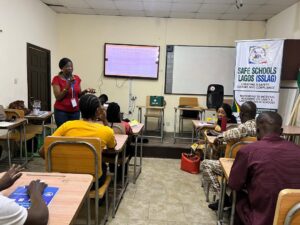
She opined that “this is a critical school safety issue that requires immediate, multi-agency intervention. She is concerned as a school safety advocate operating within the Nigerian context, that this scenario described in Ibadan—where schools are surrounded by alcohol vendors and betting shops—is a significant violation of safe school standards and child protection protocols.
Here is her full perspective addressing the points raised by Bayo Alabi of devreporting
1. Need for Heightened Concern and Regulatory Attention
Yes, this warrants emergency-level concern.
Normalisation of Vices: Proximity normalises underage drinking and gambling, making these behaviours appear acceptable to students.
Easy Access: Proximity translates to high availability, allowing minors to easily access alcohol and gambling services.
Safety & Welfare Impact: Such environments are linked to increased antisocial behavior, poor academic performance, reduced attention spans, and exposure to crime.
Urban Risk: High alcohol outlet density near schools in the Southwest region has already been identified as a driver of youth alcohol experimentation.
2. Existing Regulations and Policy Frameworks
Yes, several frameworks exist, though enforcement is often weak:
A: National Policy on Safety, Security, and Violence-Free Schools
(NPSSVFS): Specifically designed to ensure learning environments are safe and free from external hazards.
B: SSLAG (Safe Schools Lagos) the State School Safety Initiative led by Dr Bisi Akin- Alabi ( also known as Bisi Esuruoso) mandates safe zones around schools and works with local communities to regulate school surroundings.

C: Environmental Impact Assessment (EIA): Land use regulations require that businesses, especially those deemed high-risk, do not operate within specific setbacks of schools.
D: Lotteries and Gaming Regulations: State gaming boards (e.g., Lagos State Lotteries and Gaming Authority) have licensing rules that prohibit betting shops from being located near schools or in residential areas.
E: NAFDAC Regulations: Regulations on the packaging and sale of alcohol prohibit the sale of alcohol to minors and regulate the proximity of sales outlets to schools.
3. Pragmatic and Immediate Steps
To stop the escalation, the following should be implemented by State Education Boards and Local Government Authorities (LGAs):
Immediate Zoning Audit: Conduct a mapping exercise to identify all schools with, for example, a 100-meter “No-Go” zone for alcohol/gambling establishments.
Enforcement Action: Revoke the licenses of establishments operating within the restricted zone.
Safe School Setback enforcement: Erect physical signage and implement barriers, designating school surroundings as “Child Protection Zones.”
Mandatory Safety Clubs: Activate school-based safety clubs that empower students to identify risks and report them to school authorities.
4. Broader Context of School Safety and Child Protection
This trend must be categorized as a “Physical and Psychosocial Security Failure.”
Child Protection: Allowing betting/alcohol shops near schools violates the child’s right to a safe learning environment.
Crime Prevention: Such spots often serve as hideouts for delinquents, increasing risks of bullying, sexual harassment, and recruitment into cultism.
5. Role of Stakeholders
School Authorities: Must move beyond the classroom to monitor the school perimeter. They must work with the School-Based Management Committee (SBMC) to report encroachment to local authorities.
Parents: Parents should monitor children’s free time, as peer groups often encourage betting/drinking due to easy access.
Local Communities (CDA/CDC): Traditional leaders and community members must ensure that they do not lease spaces to these establishments in residential/school areas.
6. Best Practices to Adapt
“300-Meter Rule” (Kenya Model): A proactive, high-level enforcement action where the government enforces a strict 300-meter “alcohol-free zone,” forcing closure of bars near schools.
Safe Schools Lagos (SSLAG) 12 compliance Guidance for schools can be copied for Implementation. Implementing the SSLAG framework, which holds school management responsible for ensuring safety within the school zone is recommended. Schools should be mandated to undergo the SSLAG compliance journey.
Community Policing: Collaborating with local security agencies and police to remove illicit kiosks and gambling tables near school gates.
And KudEgOwo -an App, is a safety solution developed by an EdTech based in Canada that acts as a school safety monitor acting as a safeguarding bridge between home and schools with several features that helps schools and parents ensure school children are safe from home to school.
Conclusion:
The situation in Ibadan is a public health and security threat. It requires a collaborative effort between the Ministry of Education, Urban Planning and Development Boards, NAFDAC, and security agencies to create a protective barrier around schools.