




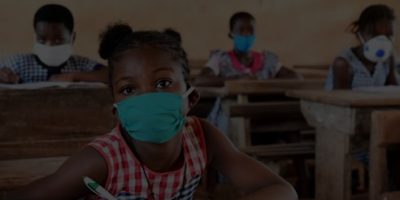










While millions of Nigerian children sit on bare concrete floors, learning under the scorching sun or in classrooms with crumbling walls, a staggering ₦97.88 billion sits idle in the vaults of the Central Bank of Nigeria.
This isn’t a lack of resources—it is a crisis of access.
This mountain of “abandoned” money represents the Universal Basic Education Commission (UBEC) matching grants, a federal lifeline designed to rescue Nigeria’s collapsing primary education system. Yet, as of March 2026, several state governments have effectively turned their backs on these funds. From Imo’s ₦10.6 billion deficit to Ogun’s ₦9.7 billion snub, the reason is as bureaucratic as it is tragic: a failure to provide the mandatory 50% counterpart funding.
In this investigative report, we peel back the layers of administrative apathy and fiscal negligence. We travel from the sleek offices of State Universal Basic Education Boards (SUBEBs) to the “ghost schools” in rural districts to ask: Why are governors choosing to leave billions on the table while an entire generation’s future remains on hold?
As of March 2026, several Nigerian states continue to have significant unaccessed Universal Basic Education Commission (UBEC) matching grants, with Imo and Ogun currently leading with the highest uncollected amounts. While many states have recently increased their access rates following federal advocacy, a total of ₦97.88 billion remains unaccessed across the country as of March 18, 2026.
Ogun, Imo and Rivers States lead the pack
States with Significant Unaccessed Funds (as of 2025/2026)
Based on reports from UBEC and data from The Punch, the following states have been flagged for failing to access substantial portions of their educational grants:
Imo State: Leads the list with approximately ₦10.6 billion in unaccessed funds.
Ogun State: Follows with ₦9.7 billion uncollected. It has historically struggled, failing to access funds consistently from 2020 through 2023.
Rivers State: Ranks third with ₦7.8 billion in unaccessed grants.
Persistent Defaulters: Recent data also identifies Benue, Kwara, Niger, Adamawa, and Bauchi as states that failed to access various disbursements ranging from 2022 to 2023.
2024 Arrears: As of late 2024/early 2025, Yobe, Kebbi, Ekiti, Bayelsa, Gombe, Akwa Ibom, Kogi, and Plateau were noted to each have roughly ₦1.39 billion in unaccessed funds from that period.
Performance and Access Trends
Total Unaccessed Funds: In 2025 alone, ₦68.1 billion was left untouched, marking the highest annual default in the scheme’s history.
Improving Access: Following direct intervention by the Ministry of Education in mid-2025, 27 states and the FCT successfully unlocked and accessed ₦78.6 billion.
Top Regional Performer: The North West zone was recently commended for achieving a 100% access rate for its grants.
Why Funds Are Often “Abandoned”
The primary reason states fail to access these funds is the statutory requirement to provide 50% counterpart funding. Many state governments struggle with:
Fiscal Constraints: Inability to match the federal grant with their own state funds.
Lack of Political Will: Failure to prioritize basic education in state budgets.
Administrative Inefficiency: Delays in developing and submitting required work plans to UBEC.
The unaccessed matching grants in states like Imo and Ogun are specifically earmarked for critical “intervention projects” designed to modernize basic education. While these funds remain idle, the following infrastructure developments are stalled:
Stalled Infrastructure Projects
Classroom Construction & Rehabilitation: Building new modern classrooms and fixing dilapidated structures to move children from “learning under trees” to conducive environments.
WASH Facilities: Installing clean water systems and sanitation (toilets) to improve hygiene and school attendance.
School Furniture: Providing desks, chairs, and cabinets for both students and teachers.
Perimeter Fencing: Enhancing school security to protect students from external threats.
Digital Resource Centres: Establishing “Smart Schools” equipped with technology for coding and digital literacy.
Universal Basic Education Commission (UBEC)
Universal Basic Education Commission (UBEC)
State-Specific Impact (as of March 2026)
Imo State: Despite a massive 2026 budget proposal of ₦1.44 trillion—with 83.4% dedicated to capital expenditure—education observers report that many schools remain “ghosted” or abandoned because the state hasn’t prioritized the matching funds needed to unlock the ₦10.6 billion.
Ogun State: The state has an unaccessed balance of ₦9.7 billion. While the government has focused on “Legacy Infrastructure” like the International Conference Centre and urban roads, basic school infrastructure in rural communities continues to lag.
Cross River: Recently issued an invitation to tender for the 2025 UBEC/SUBEB Matching Grant projects, indicating they are moving to utilize their share for new constructions.
Strategic Reform: The “HOPE-EDU” Program
In March 2026, the Federal Government launched a $552 million reform programme to address these infrastructure gaps nationwide. This initiative aims to:
Deliver 13,000 new classrooms across defaulting states.
Reintegrate millions of out-of-school children through improved local facilities.
Train 500,000 teachers in modern pedagogy and digital skills.